
Satellite Communication
VSAT vs LEO Satellites
Jan
VSAT vs LEO Satellites: Revolutionizing Maritime Connectivity
In today’s rapidly evolving maritime industry, reliable internet connectivity is no longer a luxury—it’s a necessity. Whether it’s for navigation, crew welfare, remote diagnostics, or operational efficiency, vessels require consistent, high-speed internet access. Two technologies dominate the conversation: VSAT (Very Small Aperture Terminal) and LEO (Low Earth Orbit) satellite networks, such as Starlink.
In this post, we’ll explore the key differences, advantages, limitations, and ideal use-cases of VSAT vs LEO Satellites in maritime applications.
🌐 What is VSAT?
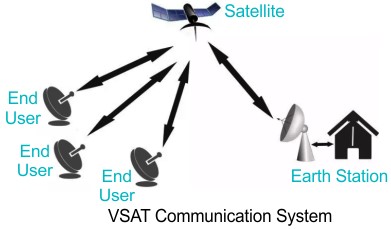
VSAT is a satellite communication system that uses geostationary satellites placed approximately 35,786 km above the Earth’s surface. These terminals offer two-way data communication for ships via a dish antenna that connects to a central hub.
🔹 Key Features:
-
Operates in Ku-band, C-band, or Ka-band
-
Typical speeds range between 512 Kbps to 10 Mbps
-
Coverage is global (with appropriate satellite constellations)
-
High latency (500–600 ms) due to satellite distance
🚀 What is LEO Satellite Internet?
LEO Satellites, like Starlink, orbit much closer to Earth—at altitudes of 550 to 2,000 km. These satellites form constellations to provide low-latency, high-speed internet to even the most remote maritime areas.
🔹 Key Features:
-
Extremely low latency (20–50 ms)
-
High speeds (up to 220 Mbps and beyond)
-
Compact and simple antenna hardware
-
Continually expanding global coverage
⚖️ VSAT vs LEO Satellites – Key Comparison
| Feature | VSAT | LEO Satellites (e.g., Starlink) |
|---|---|---|
| Orbit Altitude | ~35,786 km (Geostationary) | 550–2,000 km (Low Earth Orbit) |
| Latency | 500–600 ms | 20–50 ms |
| Download Speeds | 512 Kbps – 10 Mbps | 50 Mbps – 220 Mbps (and increasing) |
| Uplink Speeds | Up to 1 Mbps | 10 Mbps – 40 Mbps |
| Coverage | Global (with multiple satellites) | Growing coverage, limited in polar regions |
| Installation Complexity | More complex | Plug-and-play simplicity |
| Reliability | Established and stable | Improving; subject to atmospheric conditions |
| Cost | Higher monthly fees + installation | Lower ongoing costs, lower hardware fees |
🛥️ Use Cases: When to Choose VSAT or LEO?
✅ VSAT is Ideal for:
-
Vessels requiring uninterrupted global coverage (especially in polar regions)
-
Fleet operators needing traditional, contract-based service models
-
High-reliability enterprise-level marine operations
✅ LEO is Ideal for:
-
Offshore supply vessels and yachts requiring high-speed internet
-
Cruise ships and commercial vessels prioritizing crew welfare
-
Remote diagnostics and real-time data exchange
-
Companies seeking budget-friendly bandwidth solutions
📉 Limitations to Consider
VSAT:
-
High latency affects VoIP and real-time video calls
-
Larger antenna footprint
-
Costly bandwidth plans
LEO:
-
Coverage still expanding (especially in polar and equatorial regions)
-
Dependent on constellation health and satellite density
-
Regulatory clearance may be required in some territories
🧭 The Future of Maritime Internet
The maritime communication landscape is shifting. LEO constellations like Starlink, OneWeb, and Amazon Kuiper are poised to challenge traditional VSAT systems by offering faster, cheaper, and more accessible internet for ships. However, VSAT isn’t going away anytime soon. Instead, a hybrid model—combining the strengths of both systems—might be the winning formula for modern fleets.
📞 Ready to Upgrade Your Vessel’s Connectivity?
If you’re considering switching to LEO or evaluating your VSAT setup, our experts at ATEX MARINE are here to help. With over a decade of experience in maritime internet systems, we offer consultation, installation, support, and global service coverage across the UAE, Singapore, Egypt, Oman, Qatar, Bahrain, and India.
❓ FAQs
| Question | Answer |
|---|---|
| 1. Is Starlink better than VSAT? | It depends on your vessel’s needs. Starlink offers faster speeds and lower latency, but VSAT has established global coverage. |
| 2. Can I install Starlink on a commercial ship? | Yes, especially with the Starlink Maritime service plan and antenna kits designed for ocean use. |
| 3. Is LEO internet stable during storms? | While generally reliable, extreme weather can temporarily disrupt LEO performance. |
| 4. What’s the cost comparison? | LEO is typically more affordable with fewer hidden fees. VSAT is costlier due to hardware and service contracts. |
| 5. Can I use both VSAT and LEO together? | Yes. A hybrid system ensures redundancy and optimized performance. |
| 6. Is LEO available worldwide? | Coverage is expanding, but it’s limited in the polar regions and some remote areas. |
| 7. Which system is better for video conferencing? | LEO offers lower latency, making it ideal for video calls and VoIP. |
| 8. How long does it take to install? | Starlink installation is plug-and-play and can take under an hour. VSAT installation is more complex. |
| 9. Which offers better customer support? | VSAT providers usually offer enterprise-level support. Starlink support is improving as the system grows. |
| 10. Is regulatory approval needed for LEO internet? | In some countries, yes. Always check local maritime communication regulations. |
